Pest control service in San Antonio delivers targeted perimeter barrier applications, non-repellent structural soil treatments, and attic rodent exclusions designed for local limestone and expansive clay foundations. Finding reliable pest control service near me means securing verified barrier defenses against subterranean termites, striped bark scorpions, and perimeter roaches without being forced into mandatory multi-year subscription contracts.
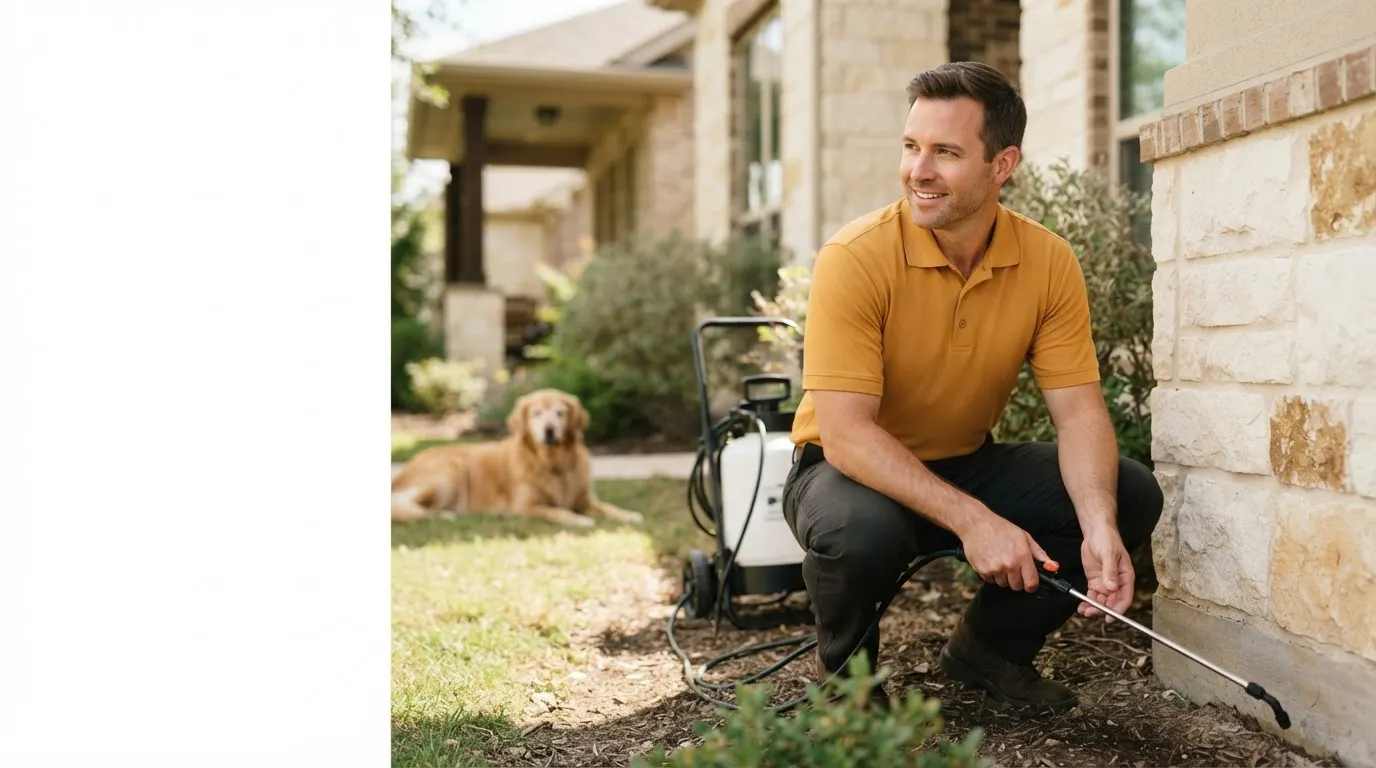
Pest Control Service company in San Antonio is a professional structural management provider that eliminates active insect and rodent infestations while creating long-term exterior chemical and physical barriers across Bexar County residences.
Every service reflects the same meticulous attention to detail, whether it's a single job or a larger pest control service project across San Antonio.
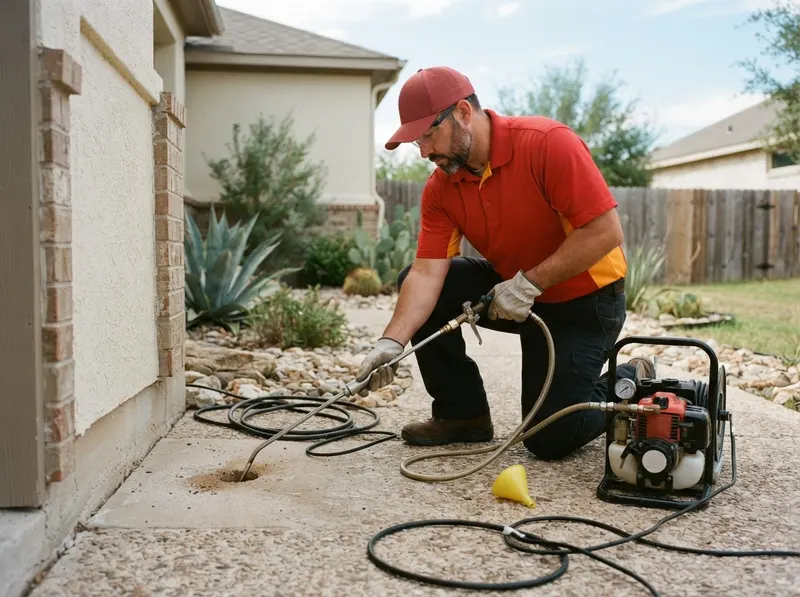
Subterranean termite control applies non-repellent liquid termiticides through continuous exterior soil trenching and concrete drilling along slab perimeters. Technicians trench 6 inches deep by 6 inches wide along foundation walls and inject non-repellent liquid agents at 4 gallons per 10 linear feet. This binds to the subterranean soil profile, allowing foraging workers to carry the active agent back to the central subterranean queen without colony detection. Concrete drilling through attached garage floors, porches, and patios occurs at 12-inch intervals to establish an unbroken chemical barrier under hardscapes.
Get a quote →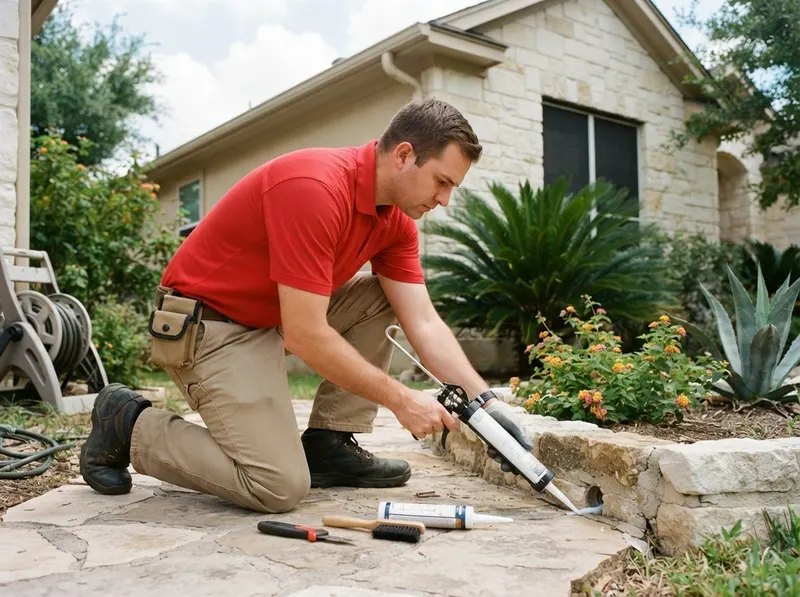
Scorpion barrier defense utilizes microencapsulated synthetic pyrethroid sprays applied in a 10-foot band around foundations paired with copper mesh screening inside weep holes. Because striped bark scorpions climb textured limestone facades to hunt crickets, targeted dusting inside dry wall voids and caulking along exterior window sills physically halts ingress before scorpions migrate into ground-level bedrooms or living areas. Technicians treat sheltered daytime harborages including landscape boulder borders, stacked flagstone piles, and decorative masonry retaining walls.
Get a quote →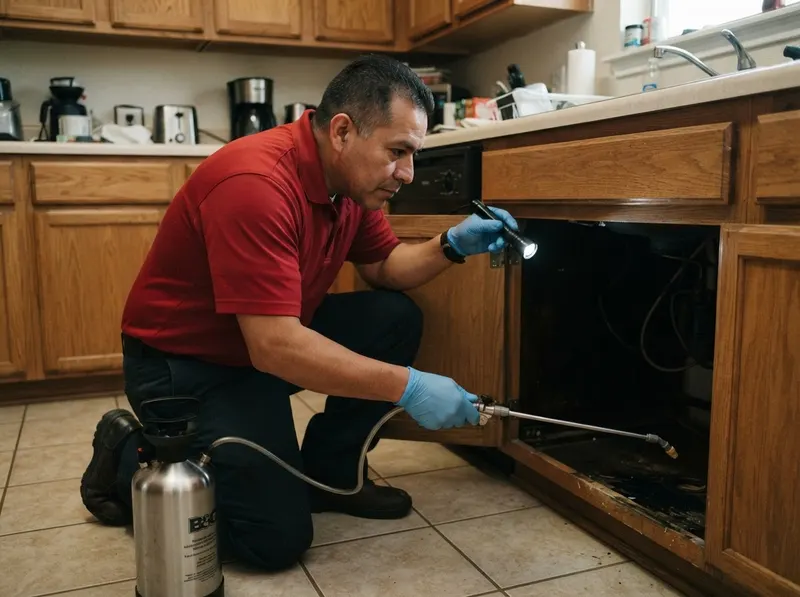
German cockroach cleanouts use targeted insect growth regulators (IGRs) combined with low-toxicity abamectin or indoxacarb gel baits placed directly inside cabinet hinges, counter seams, and motor housings. Technicians avoid broadcast indoor aerosol sprays that trigger population scattering, instead applying localized spot treatments that disrupt chitin synthesis and break nymph reproductive cycles within 21 to 28 days. Follow-up monitoring inspects glue boards beneath dishwashers and sinks to verify absolute colony collapse.
Get a quote →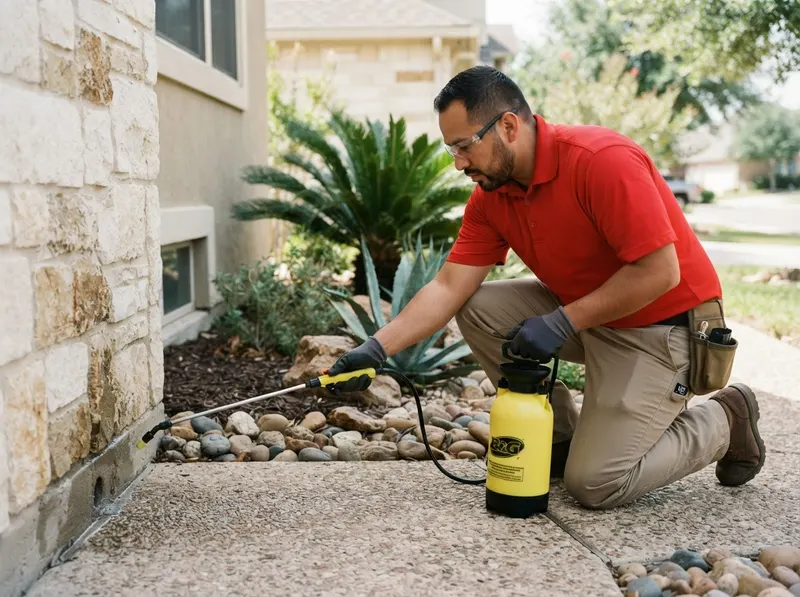
American cockroach perimeter control targets damp outdoor breeding harbors, municipal sewer tie-ins, and foundation perimeter gardens. Treatments include applying moisture-resistant broad-spectrum granules across mulch beds and injecting microencapsulated liquid barriers 3 feet up exterior walls and 5 feet out onto soil surfaces to eliminate outdoor populations before they slip under exterior doorways or garage weatherstripping. Technicians inspect cleanout pipe caps, outdoor hose bibs, and decorative flagstone patios to eliminate damp breeding zones.
Get a quote →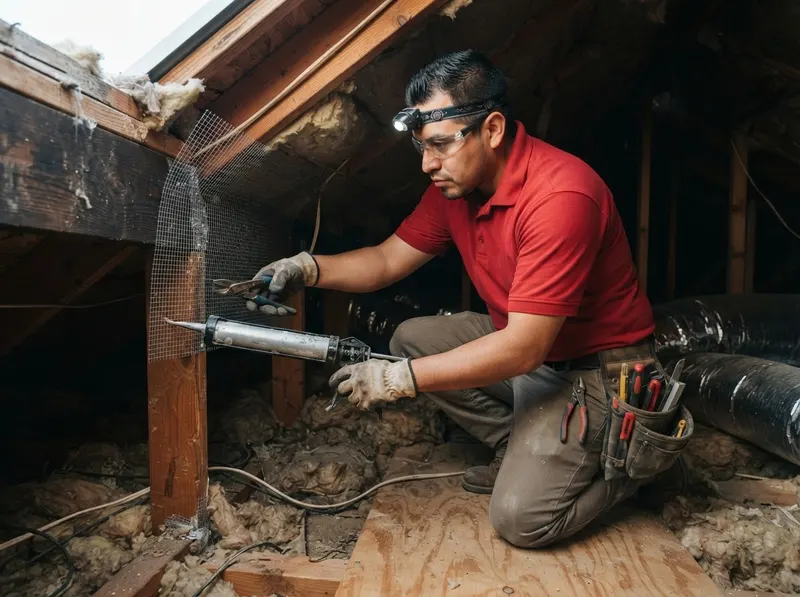
Roof rat exclusion combines complete structural entry sealing with strategic attic mechanical snap-trapping. Crews inspect roof eaves, soffit joins, plumbing vents, and air-conditioning line chases, sealing every opening larger than 0.5 inches with 23-gauge galvanized wire hardware cloth. Trapping sequences clear lingering attic pests within 7 to 14 days without using indoor poison baits that risk carcass decay behind drywall. Contaminated insulation clusters are cleared to eliminate pheromone trails that lure outdoor colonies.
Get a quote →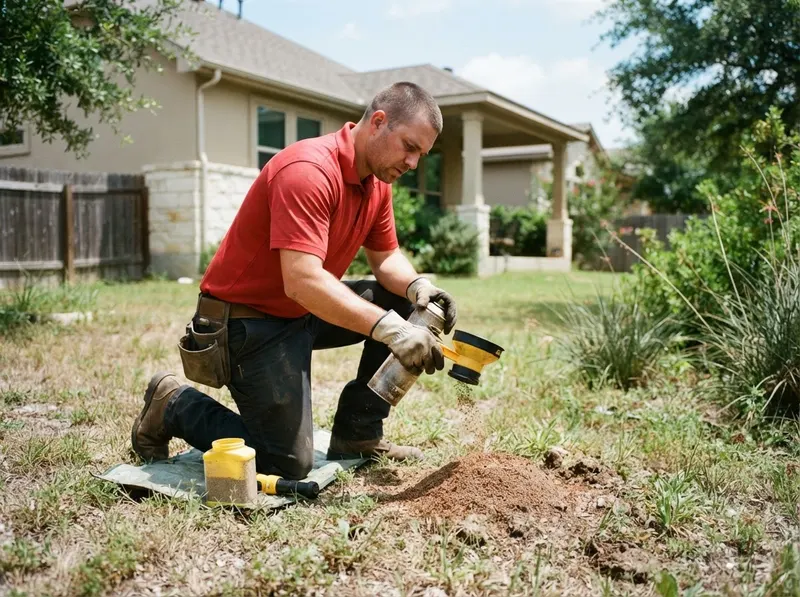
Fire ant eradication deploys methoprene or hydramethylnon granular bait across turf surfaces alongside targeted individual mound drenches. Broad broadcast treatments apply granular bait at 1.5 pounds per acre during active morning foraging periods, allowing field workers to transport the slow-acting growth regulator directly to the underground queen to collapse subterranean colony clusters across residential lawns. Individual mounds receive low-pressure liquid drenches using non-repellent biological solutions to neutralize satellite surface chambers.
Get a quote →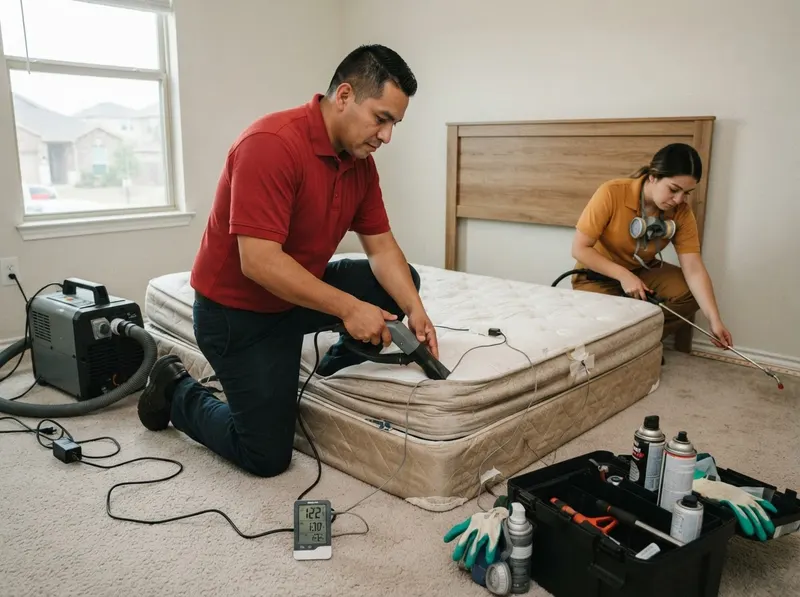
Bed bug eradication implements targeted residual liquid applications, insect growth regulators, and desiccant dusts injected directly into baseboards, bed frames, and mattress tufts. Specialized low-profile applications focus on localized structural harboring cracks, destroying nymphs upon hatching and offering persistent residual protection without staining fabrics or displacing occupants for more than 4 hours. Structural voids surrounding electrical outlets receive precision silica aerogel dusting to prevent lateral insect migration between neighboring rooms.
Get a quote →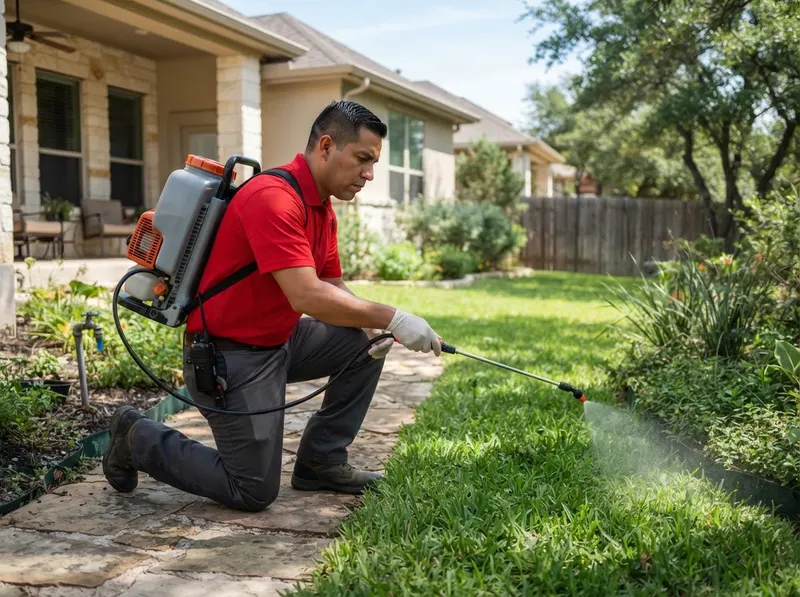
Flea and tick outdoor defense relies on liquid insect growth regulators paired with adulticides sprayed evenly across shaded turf, dog runs, and low-hanging foundation foliage. The chemical formula targets both active adults and developing larvae in the topsoil, breaking the continuous re-infestation cycle that pet owners face after walking dogs near natural brush zones or wildlife corridors. Technicians treat exterior crawl space entrances, shaded deck undersides, and property tree lines to suppress brown dog ticks.
Get a quote →You get a firm, itemized quote for your pest control service before any work begins, no surprises, no pressure.
Careful prep, tidy work, and a full cleanup when we are done. We treat your home and belongings like our own.
The same trusted, background-checked team from the first call to the final check.
Selecting appropriate structural pest intervention in Bexar County requires matching treatment methods to the biological behavior of the target organism, seasonal climatic pressures, and your specific residential foundation architecture. If subterranean termites threaten your subfloor or interior framing, choosing a complete exterior perimeter non-repellent liquid soil trench or localized concrete slab injection provides comprehensive subterranean colony elimination; if drywood termites infest isolated attic rafters or roof joists, targeted localized borate foam treatments arrest the damage without requiring whole-home tenting and gas fumigation. The operational trade-off centers directly on physical site disruption and labor investment versus spatial defense: exterior perimeter trenching protects the entire structural perimeter against subterranean workers tunneling through limestone fissures, whereas localized spot injections treat only isolated structural lumber without guarding foundation margins.
For crawling insects like American cockroaches, crickets, and centipedes, if your residence borders dense native cedar brush or caliche outcroppings in northern neighborhoods like Stone Oak or Helotes Creek, opt for an exterior microencapsulated liquid barrier combined with heavy water-resistant granular dispersion rather than indoor aerosol treatments; microencapsulated formulations resist solar degradation and withstand 100-degree ambient summer heat, whereas indoor broad-spectrum sprays break down quickly and fail to halt encroaching outdoor populations. If you encounter seasonal roof rat rustling inside attic insulation, choosing physical structural exclusion using 23-gauge galvanized wire mesh paired with strategic interior mechanical snap-trapping stops pest access permanently; opting solely for exterior tamper-resistant poison bait boxes leaves exterior roofline breaches unsealed, continually exposing interior attics to new rodent families while risking foul carcass decay odors behind drywall. Contract-free single-visit intervention gives homeowners absolute financial control without recurring auto-debit billing schedules, whereas rigid corporate quarterly agreements charge recurring maintenance fees regardless of whether seasonal biological pressures are active.
Every project gets a firm, written price after a free on-site visit. Ranges below for orientation.
Tell us about your pest control service job and we'll send a clear, written quote, usually the same day. Or just call and talk to a real San Antonio pro.
(254) 513-7340
San Antonio properties sit directly across two sharply divergent geological zones: the southern expansive black gumbo clay beds and the northern Edwards Plateau fractured limestone bluffs. In northern Bexar County communities like Stone Oak, Timberwood Park, and the Dominion, shallow caliche topsoil over limestone shelves limits burrowing depth, driving striped bark scorpions, giant desert centipedes, and Texas field crickets toward foundation weep holes during hot, dry summer periods when ground surface temperatures routinely surpass 100 degrees. Conversely, historic pier-and-beam residences and older slab constructions located near the San Antonio River Walk, King William, Monte Vista, and Southtown endure persistent subterranean termite pressures and heavy American cockroach breeding along humid municipal sewer pathways and aged storm runoff canals. Furthermore, proximity to dense greenbelts like McAllister Park and Helotes Creek channels native roof rats and wildlife along mature live oak branches directly onto residential shingle roofs, turning soffit gaps and roof vents into natural winter harborage corridors. Structural pest protection across San Antonio cannot rely on uniform chemical sprays; it demands physical barrier modifications calibrated specifically to whether a residence rests on shifting clay soils or fractured karst limestone shelves.
Free estimates for San Antonio & the surrounding area.
 Red Barn Pest Control