Thermal bed bug eradication relies on precise thermal dynamics to penetrate mattress seams, upholstered recliners, and deep wall voids where nocturnal insects conceal themselves. Commercial electric or indirect fired…
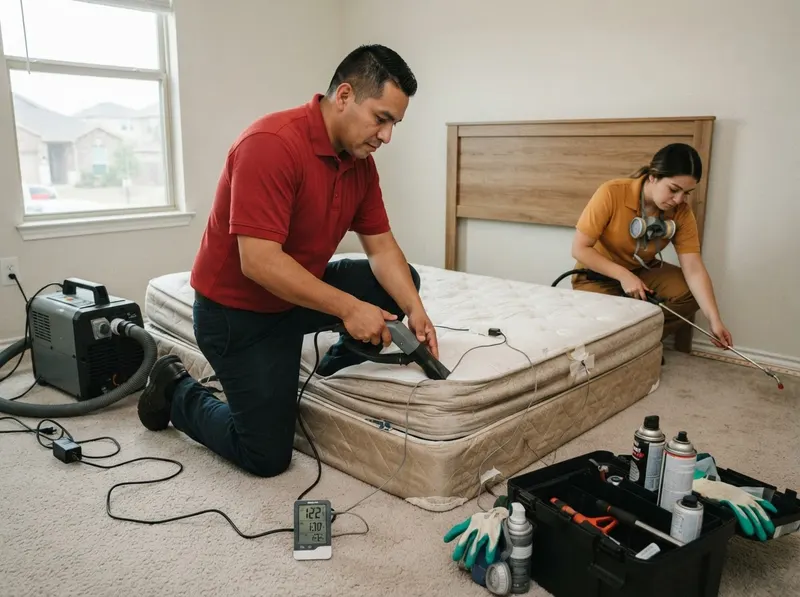
Thermal bed bug eradication relies on precise thermal dynamics to penetrate mattress seams, upholstered recliners, and deep wall voids where nocturnal insects conceal themselves. Commercial electric or indirect fired heaters circulate hot air until internal wall framing reaches a sustained 122°F for a minimum of 60 minutes, which coagulates cellular proteins in adult bed bugs, nymphs, and unhatched eggs alike. In older wood-frame properties found in King William and Monte Vista, heat convection forces its way through settling structural gaps that retail spray bottles cannot touch. Modern slab-on-grade construction in Stone Oak and Timberwood Park requires thermal sensors on exterior-facing baseboards to verify that ground-level carpet tack strips achieve lethal core temperatures before fans are demobilized.
Pure heat treatments solve severe infestations in a single operational window of 6 to 9 hours, but thermal applications leave zero residual protection behind once room air cools back to standard Bexar County interior temperatures. For sustained defense, professional exterminators apply an EPA-registered non-repellent liquid residual and insect growth regulator along room perimeters, door frames, and bed leg interceptors. This chemical barrier intercepts any hitchhiking insect reintroduced from luggage or multi-unit breezeways. In dense multi-family developments near the Medical Center or historic rental units in Southtown, combining heat with chemical residuals addresses the trade-off between instant eradication and long-term re-infestation defense.
Preparation dictates eradication success. Residents clear floor spaces, bag clean clothing on high dryer heat, and remove wax candles, prescription medications, vinyl records, and house pets prior to equipment staging. If an infestation is isolated to a single detached guest suite in Helotes Creek or an enclosed bedroom in Alamo Heights, targeted residual applications with steam spot-treatments serve as a cost-effective alternative to full-structure thermal baking. Every treatment plan is confirmed via on-site physical measurement rather than standard square-foot estimates, ensuring no forced monthly service agreements or recurring maintenance traps.
Every job gets a firm, written price after a free on-site visit.
Tell us about your bed bug heat and chemical remediation job in San Antonio and we'll send a clear, written quote, usually the same day.
 Red Barn Pest Control