Roof rats (Rattus rattus) exploit elevated transit pathways in Central Texas, using mature live oaks, utility drops, and Spanish tile roofs to gain overhead access. In older neighborhoods like Monte Vista and Alamo…
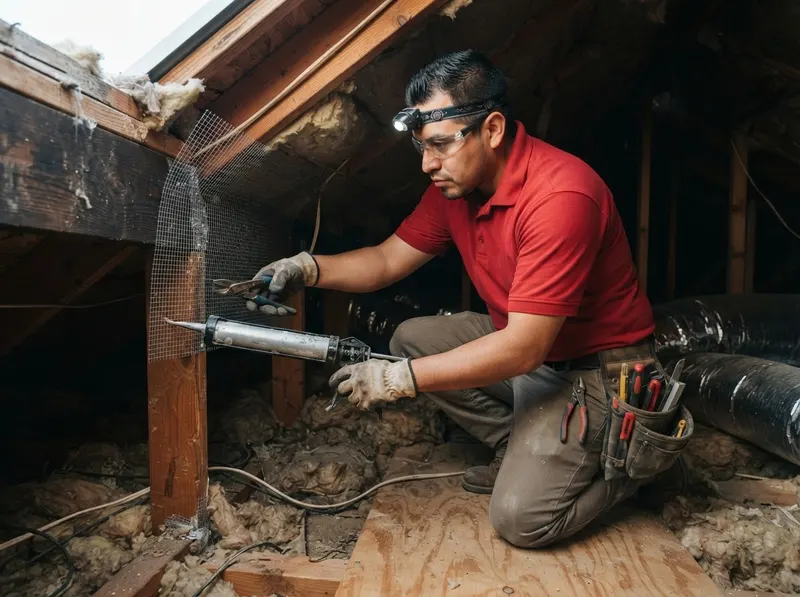
Roof rats (Rattus rattus) exploit elevated transit pathways in Central Texas, using mature live oaks, utility drops, and Spanish tile roofs to gain overhead access. In older neighborhoods like Monte Vista and Alamo Heights, these rodents slip beneath warped cedar fascia and open eave junctions measuring as small as half an inch. Newer suburban construction in Stone Oak and Timberwood Park frequently leaves builder-grade plastic ridge caps and weep holes unsealed, offering zero defense against aggressive gnawing. Structural exclusion prevents these animals from shredding electrical wiring, soiling attic insulation, and nesting above ceiling joists.
Effective attic roof rat exclusion differs fundamentally from repetitive poison bait programs. Chemical bait boxes leave carcasses to decompose inside wall cavities, causing severe odor problems and attracting secondary dermestid beetles. Exclusion permanently denies entry by bending and fastening galvanized metal flashing across rafter tails, securing copper mesh into mortar joints, and sealing barrel tile voids. Homeowners with steep pitch multi-gabled roofs in The Dominion face higher linear foot sealing requirements than single-story ranch homes near Culebra Park or historic cottages in King William. The direct operational trade-off is mechanical sealing: it requires dedicated up-front exterior construction rather than passive periodic poison reloads, eliminating recurring subscription dependency.
1. A technician completes a ground-to-ridge exterior perimeter scan, charting roof transitions, plumbing stacks, AC line penetrations, and soffit vents.
2. Technicians install custom-fitted 1/4-inch galvanized steel mesh and heavy-duty steel flashing over all identified roofline openings, chimney chases, and gable vents.
3. Technicians place mechanical snap-traps inside the attic envelope to extract any existing rodents trapped inside, monitoring the attic until zero activity remains.
4. Technicians conduct an exit inspection to verify that all access points remain impenetrable and that interior activity has ceased entirely.
Every job gets a firm, written price after a free on-site visit.
Tell us about your attic roof rat exclusion job in San Antonio and we'll send a clear, written quote, usually the same day.
 Red Barn Pest Control